Every morning, we curate only what matters from AI news, tools, and products around the world. Understand → Try → Build.
BACK NUMBERHigh impact –News –YouTube –Categories –
TOP SIGNAL
High impactHigh signal
An AI builds a city game: Inkling 2 Small’s creative demos
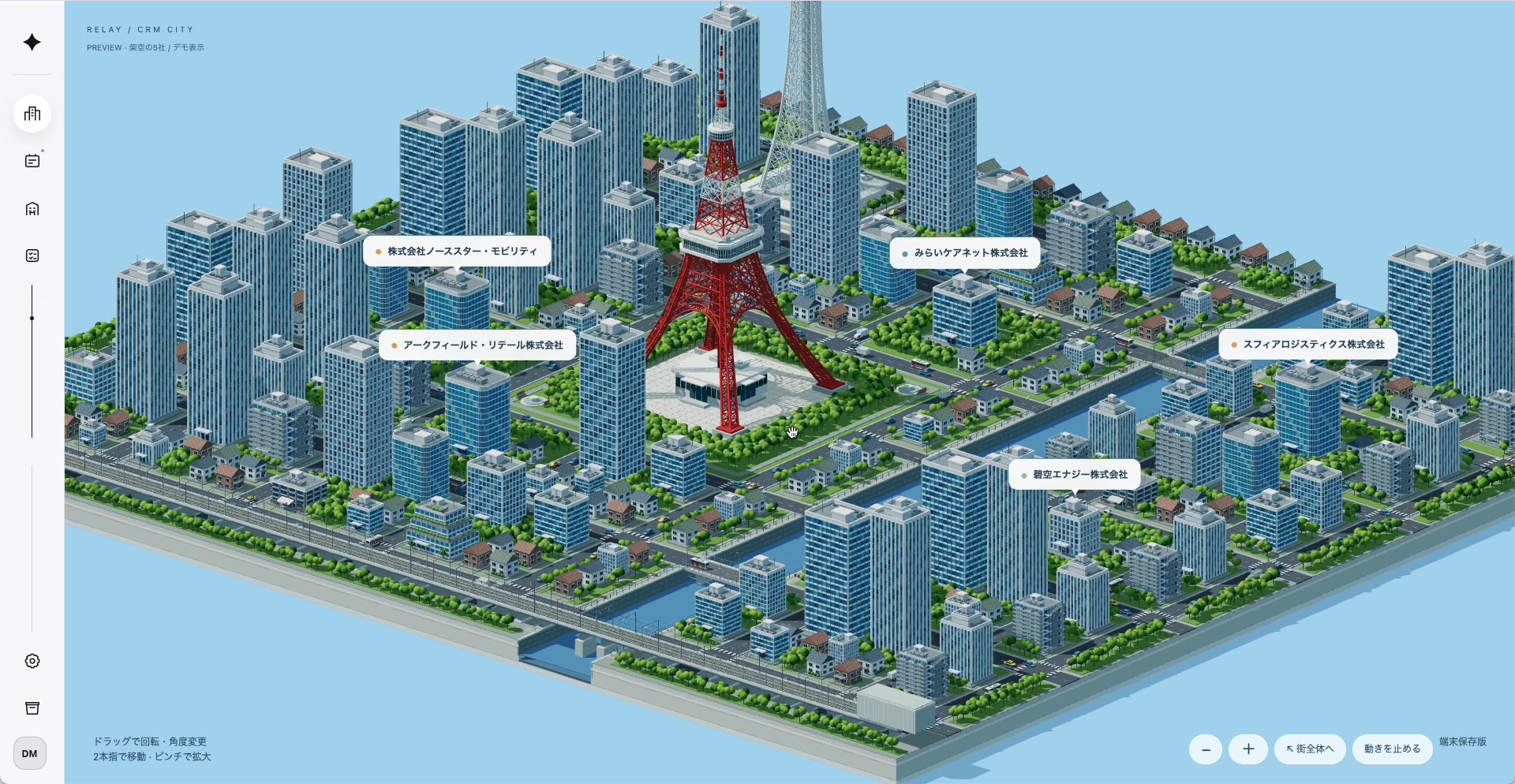
An AI writes the code for a city game that grows from a single road. Thinking Machines Lab introduced Inkling 2 Small on November 5, showing how it uses images and visual feedback to refine its work. At observation, Hacker News had 289 points and 92 comments on the release.
Buildings and cars made with code
The company’s city-simulator demo generates buildings and cars without pre-made assets and includes power and budget management. Another demo shows a paper-like 3D landscape with revisions to water and a chimney. These are vendor demonstrations, not independent evidence that every request produces comparable results.
Available on Tinker; weights planned for later release
The model can currently be tried on Tinker, which also supports fine-tuning with custom data. The company says full weights are planned for the following week after external testing. At announcement, they were not public; trying a hosted model and running it on a personal computer are different stages.
What stands out in Inkling 2 Small today is how building a city game and revising the visible result become part of one process.
The first description does not have to settle the final form.
OpenAI’s Images 2.6 also emphasizes keeping people and products consistent through editing rounds. Make a first version, then explain the difference you want. That exchange is drawing closer across images and interactive screens.
Change a building’s scale. Change how a product is shown. Seeing a first result makes the next adjustment more concrete.
Luma and Kittl connectors let a planning conversation lead directly into image or video production, making it easier to move between an idea and its visible form.
Creating begins with growing a first version together.
The creator compares three AI clips of a woman walking and taking selfies at a train station, using text alone, a character image with text, or a character image with reference footage. The creator also shows how to change the outfit and background.
In the description, the creator introduces a newly published intermediate Illustrator course. They say it covers how to use the software, along with techniques and ways of thinking they apply in their own work and content creation.
The creator hands Claude Code the editing for a 15-second promo, a HeyGen avatar video, and a clip made from a photo in Google Flow. They share the prompts they used, how they fixed mistakes, and how they turned the workflow into a reusable skill.
Recorded November 5, this discussion with Canly’s Takahiro Hagino covers cloud virtual machines behind smartphone-based Muse use, booking and email assistance, adoption barriers, Meta’s revenue strategy, Amazon and search advertising, and safety considerations for agent use.
Presents eight principles for choosing and combining open, closed, inner, and outer loops in AI automation. Topics include scheduled execution, event monitoring, when closed loops are appropriate, and the startup, stopping, and handoff arrangements needed for outer loops.
According to the description, free Muse receives specialized models informed by Wonder rather than Wonder itself. It examines memory and persistence using Meta’s evaluations, noting that the reported 67% task-completion improvement is relative and separating published findings from the creator’s interpretations.
Examines a DeepSeek super-agent approach intended to reduce the burden of managing multiple Claude Code sessions. The creator discusses its harness and testing, and reports adapting the approach into a workflow that implemented features and fixed a bug autonomously.
Walks through setting up Claude and Remotion, creating an animated iPhone timeline, revising it through text prompts, and exporting an MP4. The description also covers vertical formats, sound effects, custom branding, polishing the animation, and limitations to consider before starting.
Updated every two days · Last updated 2026-11-08
Claude / Anthropic
01
Medium impactMedium signal
Claude adds a read-only view of personal finances in US beta
Users can connect bank and card accounts and ask about spending and upcoming payments. The beta is for US Pro, Max and Ultra plans; it cannot transfer or invest money.
Claude trades and coordinates in two EVE game experiments
EVE Online trading was tested in a simulator replaying historical orders. In EVE Frontier, four agents cooperated on extended missions in the live game.
Anthropic explores proving which model produced a response
FlashProve uses cryptographic proofs to verify that a response came from a specified model computation. It is intermediate research, not proof that an answer is factually correct.
Images 2.6 brings GIFs and more consistent image editing
OpenAI is rolling it out in ChatGPT, Codex and the API, emphasizing character and product consistency across edits, GIF creation and API model choices for speed or quality.
OpenAI plans to acquire Pierre, maker of code review tools
Pierre’s Trees and Diffs libraries already power parts of Codex. Closing remains subject to approvals and other conditions; the open-source projects will remain open-source.
Australian universities expand practical learning with ChatGPT Edu
OpenAI describes clinical simulations and student prototypes alongside staged university rollouts, distinguishing current access from plans for broader availability.
Cursor connects app creation to a shareable live link
Cloud agents can set up an app, database, authentication and hosting on supported paid plans. Checks must pass and a person must explicitly publish before it goes live.
GitHub tracks what developers do with Copilot review feedback
Repository usage reports now include addressed review comments. Actions include manual edits and replies deferring a fix, so the metric is not a completed-fix rate.
Luma brings product imagery and video workflows into chat
The connector lets ChatGPT and Claude call Luma workflows for camera angles, backgrounds, lighting and short clips using the user’s Luma account and credits.
The company says ChatGPT and Codex can generate storyboards and music videos from a song and reference imagery, then request shot changes. An Enkio account and credits are required.
Meta rolls out specialized models for Muse and Meta AI
The models are trained using Muse Wonder, with reported improvements in using relevant memory and continuing toward goals when unexpected problems arise.
Researchers describe AI-assisted scientific model building
In an Anthropic guest post, Tübingen researchers discuss constructing, constraining and interpreting scientific models, using examples from neuroscience.
timm 1.0.31 fixes image-model export and reload behavior
The maintenance release corrects checkpoint reconstruction after classifier changes, image-input handling and training settings across several vision architectures.